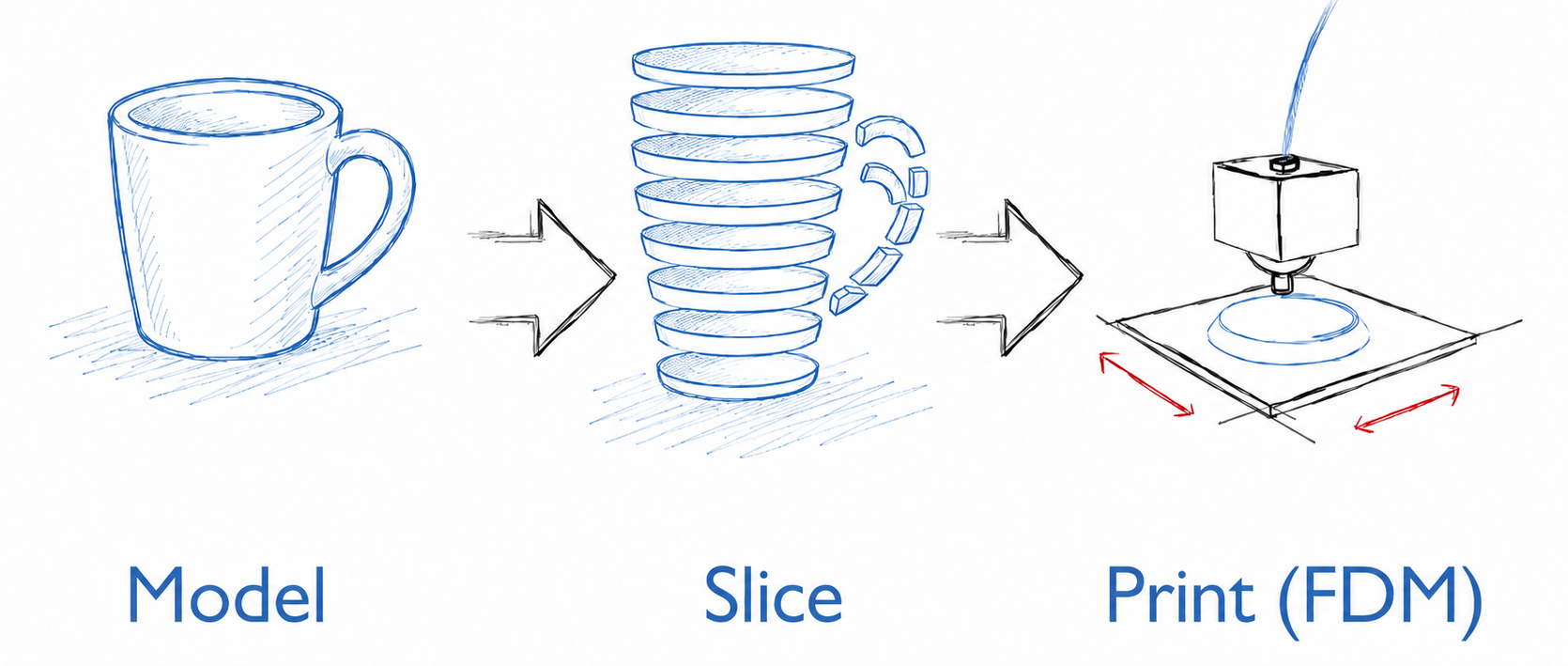
Rapid Automated Prototype Creation

3D printing has revolutionized the way we iterate on physical designs, allowing for rapid prototyping that was previously impossible. However, scaling this process remains a significant challenge. While the printing speed itself is often sufficient, the overall throughput is hampered by the need for manual intervention at the most inconvenient times—specifically, the transition between prints.
Problem Statement
The primary challenge with current consumer and prosumer 3D printers is the utilization problem.
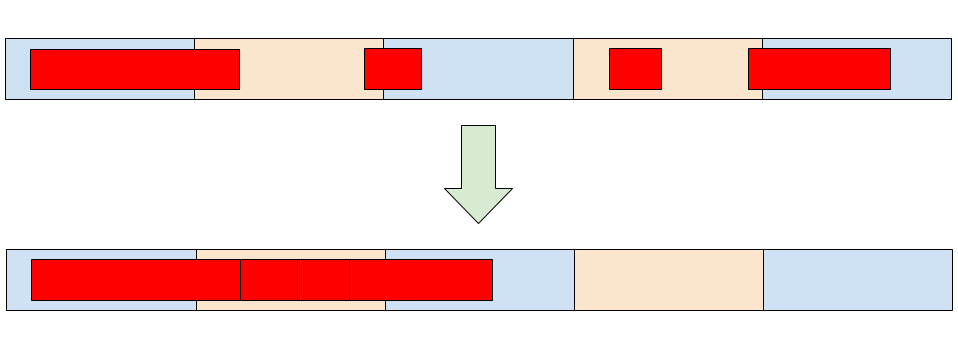
Currently, each 3D print finishes and then sits idle until a human operator physically removes the part from the build plate and initializes the next job. Depending on the operator’s schedule, this idle window can range from minutes to several hours, leading to significant waste of potential machine time.
This inefficiency is stark when compared to how the machine learning community handles compute resources. In ML, training jobs are managed via automated queues. Once a GPU finishes a task, the scheduler immediately feeds it the next job in the queue, ensuring that expensive hardware operates at near 100% utilization.
What is required for scalable prototyping is a similar shift: moving from a manual-trigger process to a queued system where the transition between jobs is automated, eliminating the human-in-the-loop bottleneck, while maintaining the ability to manually cancel a batch.
Solution
Low cost automatic plate changer
To solve the utilization problem, the objective is to decouple the “print completion” event from the “human removal” event. This is achieved by implementing an automatic plate changer (APC).
An APC allows the printer to swap the current build plate for a fresh one as soon as a job finishes. This effectively transforms the 3D printer into a batch processor: instead of one print per human intervention, the machine can execute a queue of multiple prints across several plates. The human operator then collects all completed parts in a single trip, mirroring the way a GPU cluster processes a batch of training jobs before the researcher checks the results.
The following components comprise the bill of materials for this automated setup:
| Item | Purpose | Price | Link |
|---|---|---|---|
| Bambu Lab A1 | Core 3D Printer | $379.00 | Store |
| Additional Build Plates | Provide multiple surfaces for the queue | $24.99 CAD | Store |
| JobOx A1 Automatic Plate Changer | Hardware for automated plate swapping | ~$90 CAD | JobOx |
| 3D Printer Filament | Raw material for prototyping | ~$20 / kg | Your favorite store |
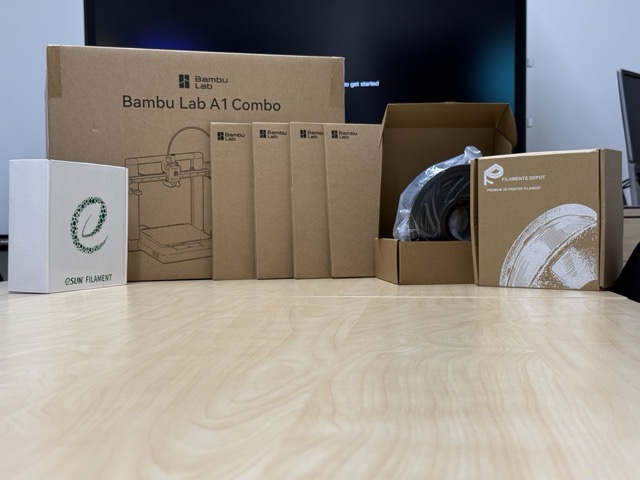
TOTAL: 20*2 + 90 + 25*4 + 379 = ~$609 CAD
The Whole Picture
To understand how this system integrates into a professional prototyping workflow, it is helpful to look at the end-to-end pipeline. The process transforms from a manual, one-off task into a streamlined production line.
The Workflow Pipeline
- Design: The process begins in a 3D design environment. Whether using professional tools like AutoCAD or cloud-based platforms like Onshape, the goal is to create a precise digital representation of the part.
-
Slicing: Once the design is finalized, it is imported into Bambu Studio. Here, the software “slices” the 3D model into a series of 2D layers and generates the G-code that tells the printer exactly how to move.
-
Queuing: In a standard setup, you would send this file directly to the printer and wait. In the automated setup, an additional step is introduced: the sliced objects are sent to a queuing program. This program manages the order of prints and communicates with the hardware to ensure the next job is ready the moment the previous one completes.
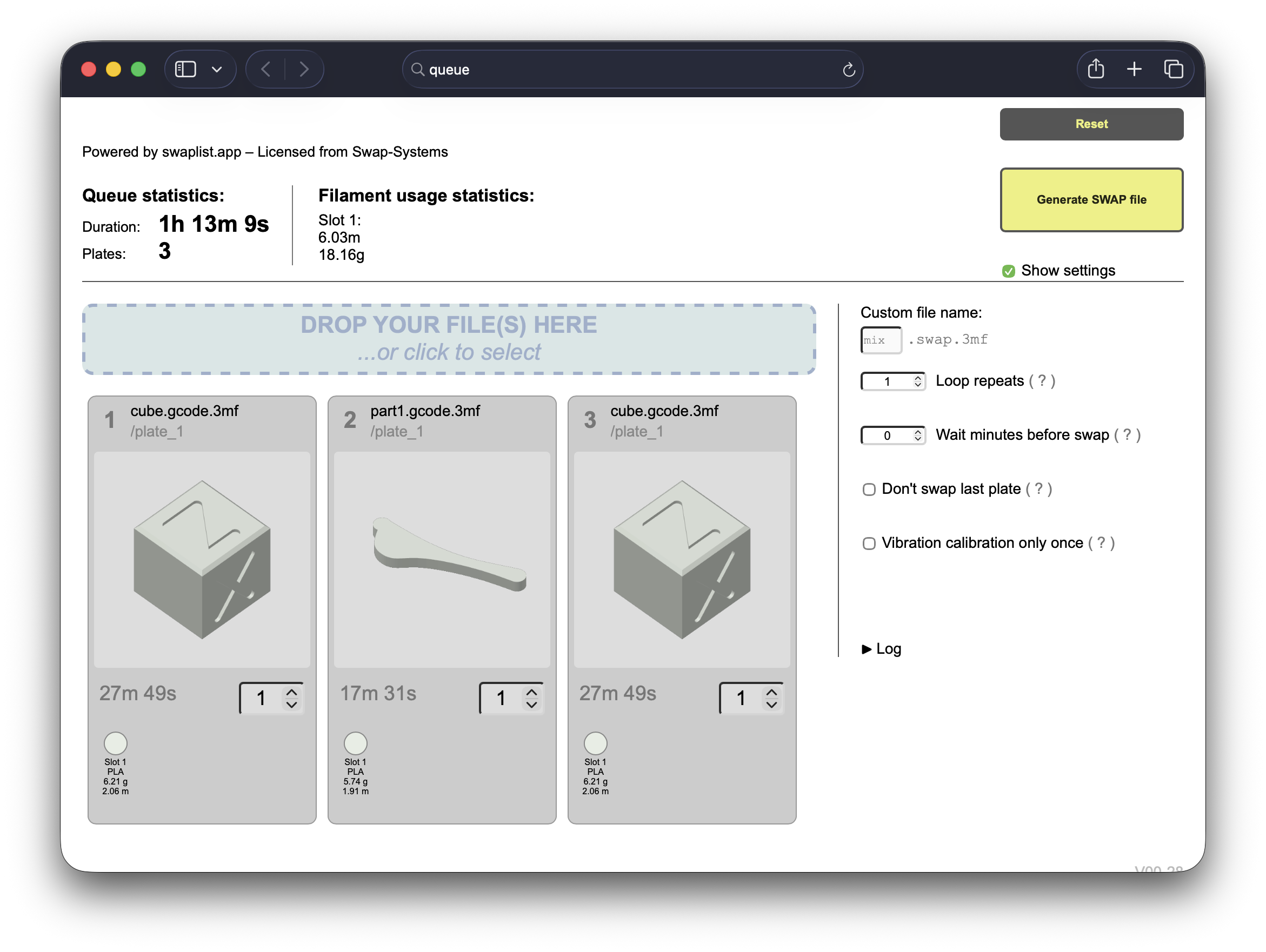
- Automated Execution: The Bambu Lab A1, equipped with the APC system, executes the queue. As each print finishes, the APC swaps the build plate, and the next job begins immediately. This removes the human-in-the-loop bottleneck and maximizes machine utilization.
Conclusion
By shifting from a manual-trigger model to an automated, queued system, we can drastically increase the throughput of a prototyping lab without requiring more human hours. The implementation of a low-cost automatic plate changer transforms the 3D printer from a tool that requires constant supervision into a reliable background utility.
The total investment of approximately $600 CAD provides a scalable foundation for rapid iteration. This setup not only minimizes idle machine time but also allows designers to focus on the creative and engineering aspects of their work rather than the logistics of part removal.
Looking forward, the next steps for this automation journey include integrating automated quality inspection—perhaps using computer vision to verify print success before queuing the next job—and scaling this architecture into a multi-printer array managed by a centralized scheduler. By treating physical fabrication with the same efficiency as cloud computing, we can accelerate the bridge between digital design and physical reality.